3D Clash Coordination
Clash coordination is how we catch and resolve conflicts between trades early in the BIM process, before they turn into problems in the field.
We check that both the individual trade models and the combined federated model are properly organized and free of conflicts, handling the detailed adjustments that come after modeling is done.
Getting this right protects the two things that matter most on a project: budget and schedule.
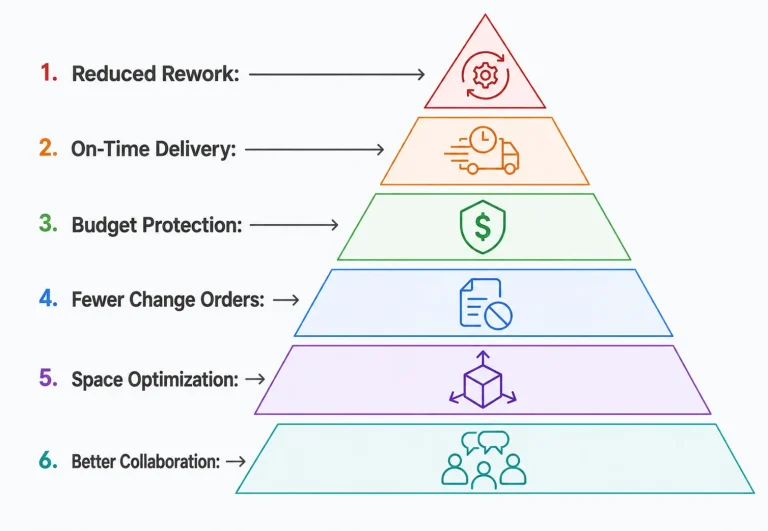
✓ Limits rework by catching conflicts before they reach the field.
✓ Keeps projects running on schedule, or ahead of it.
✓ Protects your budget by avoiding costly on-site surprises.
✓ Cuts down on change orders through effective upfront coordination.
✓ Makes better use of built-up areas by resolving space conflicts early.
✓ Improves collaboration between architects, engineers, and contractors through a shared review process.
1
We gather individual trade models from each discipline involved in the project.
2
Trade models are combined into a single federated model for review.
3
The federated model is run through clash detection software to flag hard and soft clashes.
4
Flagged clashes are reviewed with trade teams and resolved through coordinated adjustments.
5
The coordinated, clash-free model is delivered, ready for fabrication or construction.
Identifies physical overlaps between building elements and systems before construction
Flags clearance and access issues that could affect installation or maintenance.
Aligns mechanical, electrical, plumbing, and fire protection systems across the coordinated model.
Detailed clash analysis and reporting run through Navisworks for accurate issue tracking.
Coordination managed within your project's Common Data Environment for centralized model access.
Checks new systems against existing conditions to keep retrofit integration clean.
Ongoing tracking and resolution of flagged clashes through to final sign-off.
Share your BIM model or drawings — we'll turn them into visuals your stakeholders can approve on sight.